
|
Hui o Koʻolaupoko (HOK) is excited to announce the launch of our 2014 Makai to Mauka Fundraiser. This year's fundraiser includes two events that reflect HOK's mission of: protecting ocean health by restoring the ʻāina: mauka to makai. The first event, Huakaʻi Makai (journey to the ocean), takes place on Sunday, November 2nd on Kailua Bay. This makai event includes a race for ocean enthusiasts in the categories of swimming, outrigger paddling and stand-up paddle boarding, choosing from three different courses in Kailua Bay. This event is a partnership with Kailua Sailboards and Kayaks and Kanaka Ikaika and aims to raise awareness about HOK's efforts to protect ocean health. The second event, Huakaʻi Mauka (journey to the mountains), takes place on Saturday, November 8th on the beautiful grounds of Kualoa Ranch. This mauka event includes an elegant evening on the ranch featuring a cocktail hour with pupu's by Sweet Home Waimanalo and jeep tours to view HOK's Hakipuʻu Stream Restoration Project. The festivities will be followed by a farm to fork dinner collaboration by Chef Mark "Gooch" Noguchi of Pili Group, Chef John Memering of Cactus and Chef Kealoha Domingo of NuiKealoha. In addition, the evening will feature live music from Keauhou, an open beer and wine bar, a dessert bar and a robust silent auction. We hope you will join us in making our inaugural fundraiser a huge success. For Huakaʻi Makai race entries, Huakaʻi Mauka dinner tickets, and event sponsorship opportunities visit the Hui o Ko'olaupoko website. 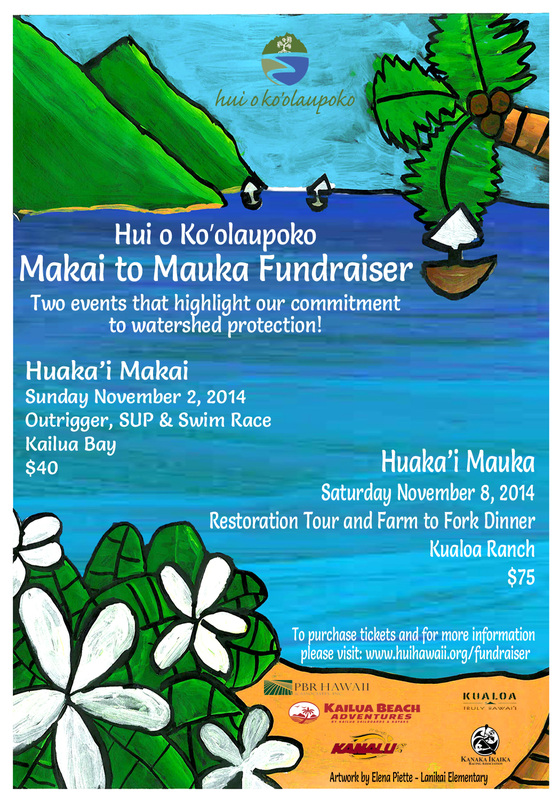
0 Comments
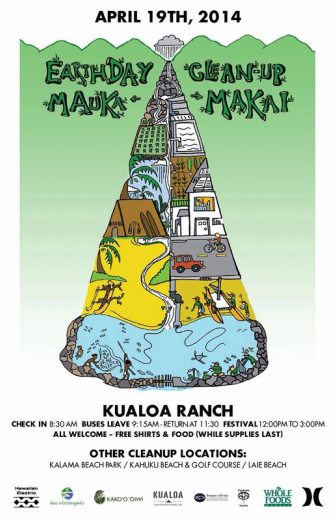 Sustainable Coastlines Hawaii is marking Earth Day 2014 with a multi-organizational partnership to teach participants that clean beaches are not only accomplished through physical cleaning, but more importantly through your actions within the ahupua'a system such as lifestyle choices, consumer/disposal behaviors and through proper management of your own property. Hakipu'u Stream Restoration Project is one of 4 restoration locations and multiple beach cleanups that event participants will have the opportunity to participate at on April 19th. Non-profit partner Hui o Ko'olaupoko (HOK) will be hosting this site that is working to restore native forest around a mauka spring and stream. Check out this video from the site's first workday in 2012 and join HOK on April 19th to see how far we have come and loan a hand planting natives! Hōkūleʻa SWS - Hakipuʻu Stream Restoration on Vimeo PLAYER.VIMEO.COM|BY OIWITV 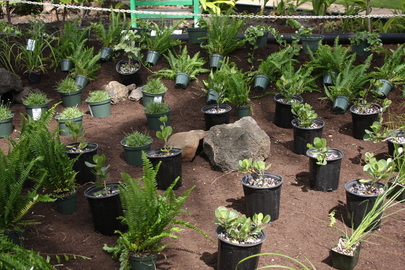 Waikiki Aquarium Mauka to Makai Environmental Expo
Hui o Ko'olaupoko is honored to be building a rain garden at the Waikiki Aquarium. This 150 square foot rain garden will capture roof runoff from the Diamond Head side of the main building and infiltrate water in to an area vegetated with native plants suitable for a coastal environment. The rain garden will be unveiled at The Waikiki Aquarium's annual Mauka to Makai Environmental Expo. This earth day celebration on April 19th from 9am to 2pm highlights the impact we make on water sources from Mauka to Makai. The Waikiki Aquarium and 15 other organizations provide educational activities for both children and adults on how to preserve and protect this diverse environment. The event also boasts free aquarium admission and a native plant giveaway. Hui o Ko'olaupoko and Surfrider Foundation will be presenting a Rain Garden Workshop on Thursday, February 27th from 6:00 pm - 8:00 pm at the Capitol One 360 Cafe located in Waikiki at 1958 Kalakaua Ave. Rain gardens are flat bottomed depressions planted with native vegetation use to capture excess storm water and pollutants from rooftops, driveways, sidewalks, parking lots or streets. Rain gardens are great projects for helping to protect stream and ocean health. This workshop will cover all aspects of designing and building a rain garden in your yard. The workshop will help you to determine a good site for your rain garden; how to conduct an infiltration test and sizing your rain garden accordingly; laying out your design; plant selection; purchasing materials and installation process; and maintenance of your rain garden. If you are planning on attending and are able to bring a computer or tablet, please visit our website to download a copy of the Hawaii Residential Rain Garden Manual to follow along with during the workshop. Hard copies of the manual will also be available for purchase for $15 during the workshop. Although it is helpful to have the manual to follow along with during the workshop and for future reference, it is not critical that you have a copy. All are welcome to attend. Food and beverages are available for purchase at the Capitol One 360 Cafe during the workshop. Parking in the Capitol One parking lot is limited so please carpool if possible. Additional parking is available at Fort DeRussy for $7/day. Please RSVP via Facebook or by e-mail so we can get an idea of how many people will be attending. 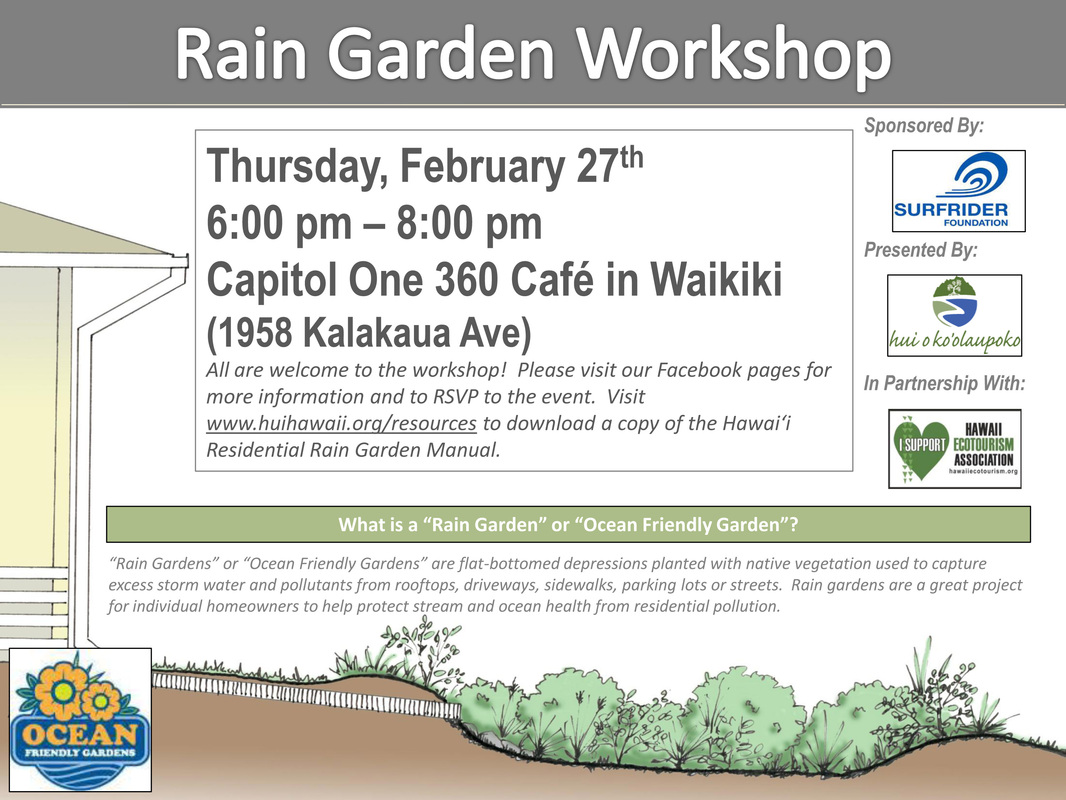 |
Archives
September 2022
Our MissionThe mission of Hui o Ko`olaupoko is to protect ocean health by restoring the `aina: mauka to makai. This is done in partnership with stakeholders including interested citizens, non-governmental organizations, government, educational institutions and businesses while using and focusing on sound ecological principles, community input, and cultural heritage. Categories
All
|
 RSS Feed

335 Hahani St. #1892
Kailua, HI 96734 Protecting ocean health by restoring the 'āina: mauka to makai
|
|
Copyright © 2024 Hui o Ko`olaupoko
Last Updated: July 8, 2024. |